ARCHAEOLOGICAL AREAS
The territory of Bortigali is an archaeological treasure chest of inestimable value: domus de Janas, dolmens, Giants’ tombs and dozens of nuraghi are scattered there.
Evidence of human presence in Bortigali dates back to the Recent Neolithic (4000-3500 B.C.) and is documented mainly by the domus de janas, rock-cut tombs typical of Sardinia. Among the most significant are the domus de janas of Òrolo (named after the nuraghe), consisting of two communicating domus with separate entrances and structures articulated in cells of elliptical and quadrangular shapes.
There are other artificial caves in Curcai and Giorbène localities, while on the outskirts of Bortigali is the domus de janas Milia, consisting of two cells preceded by a short pavilion. Remains of necropolis are also found on the southeastern slopes of Mount Surdu, while two pre-Nuragic dolmens are found in the localities of Carrarzu Iddia and Tùide.
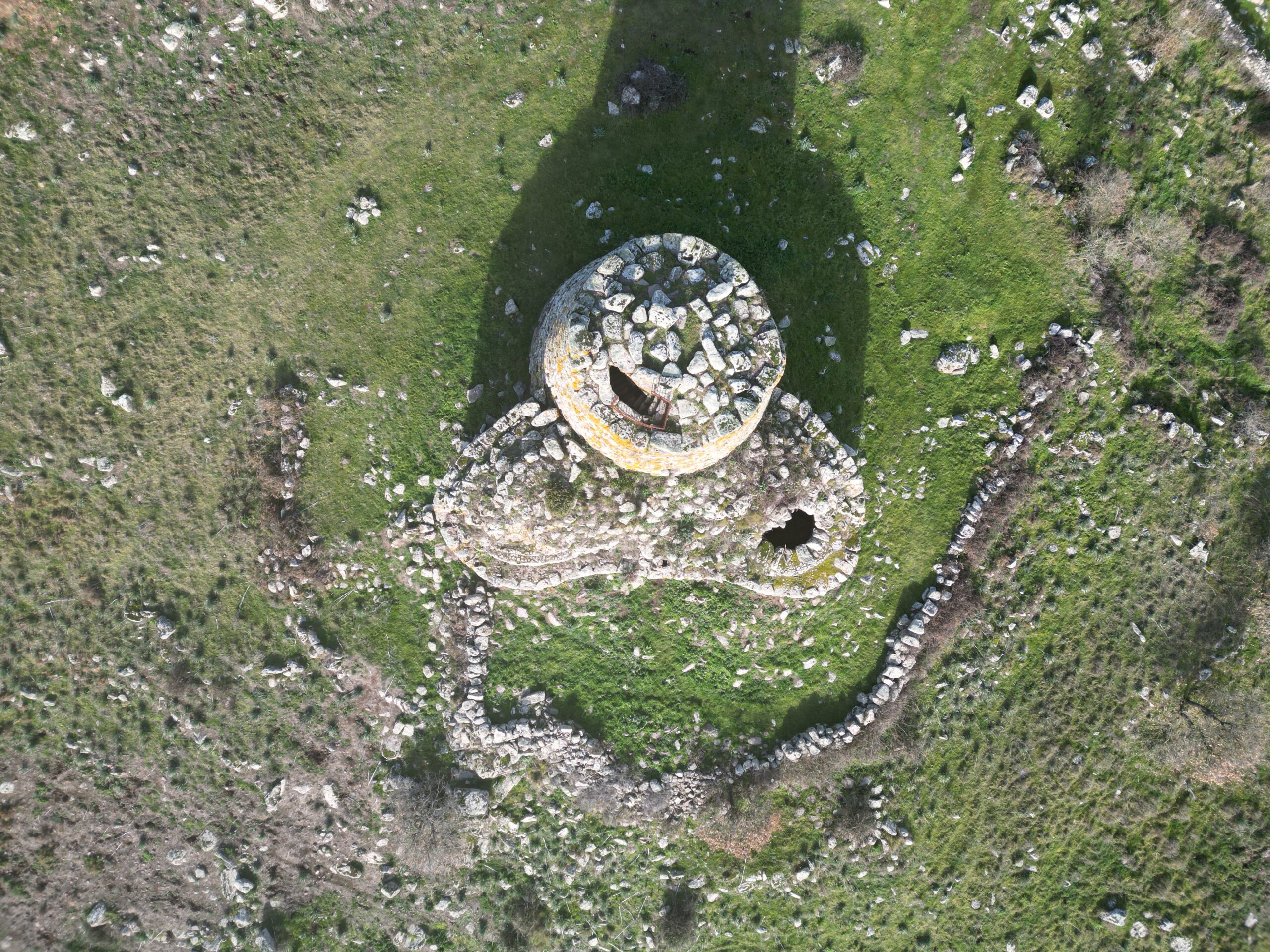
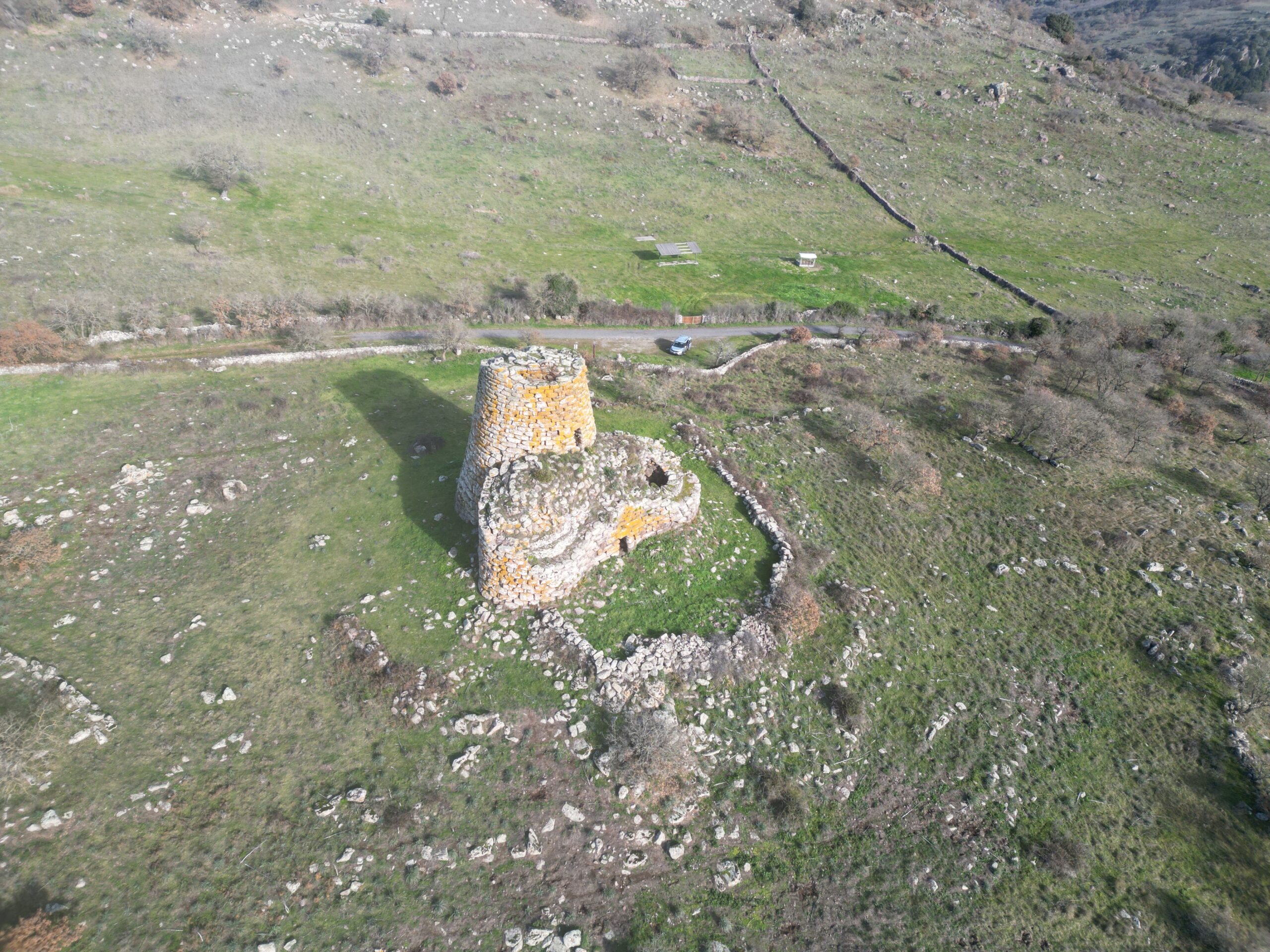
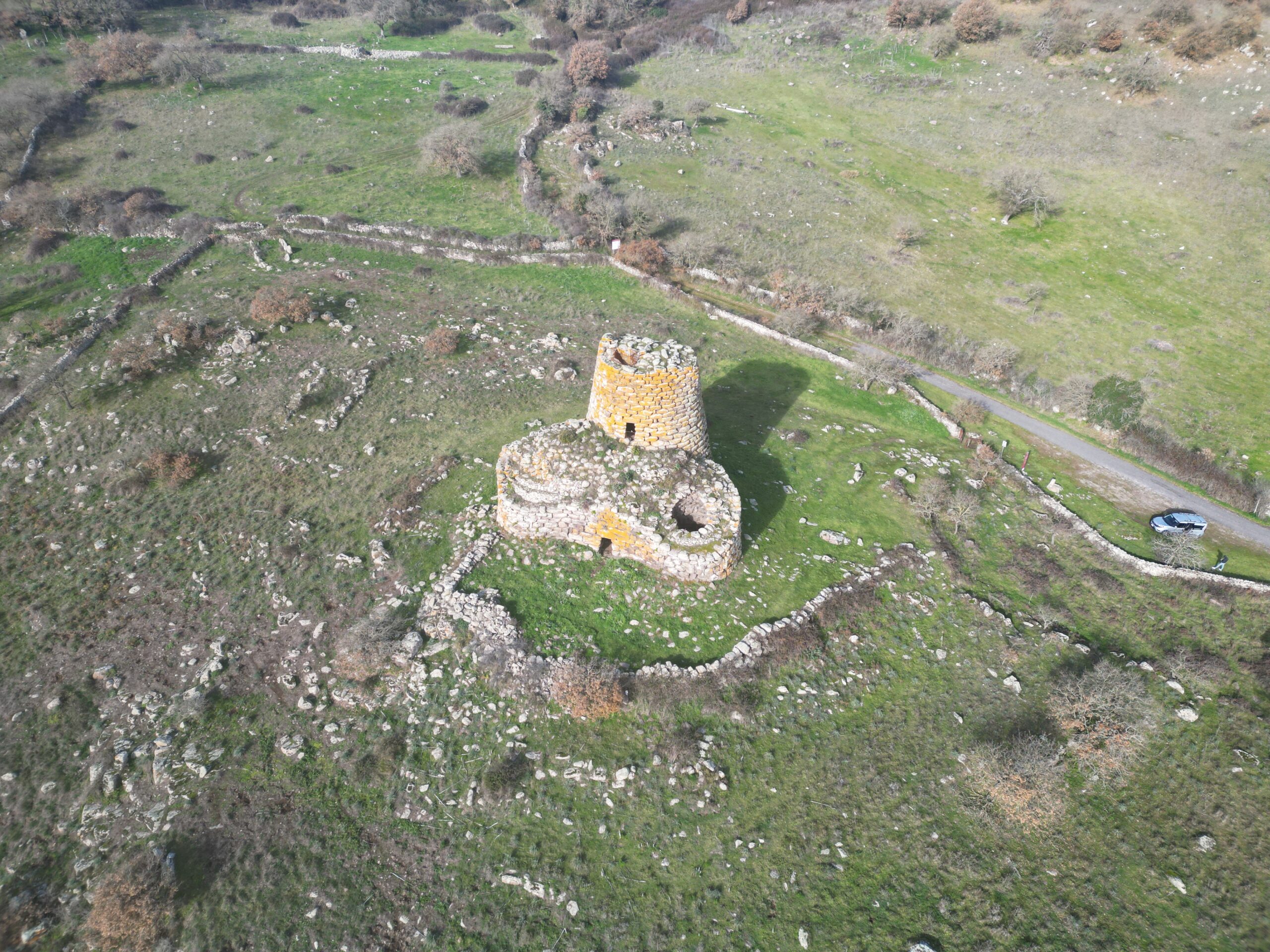
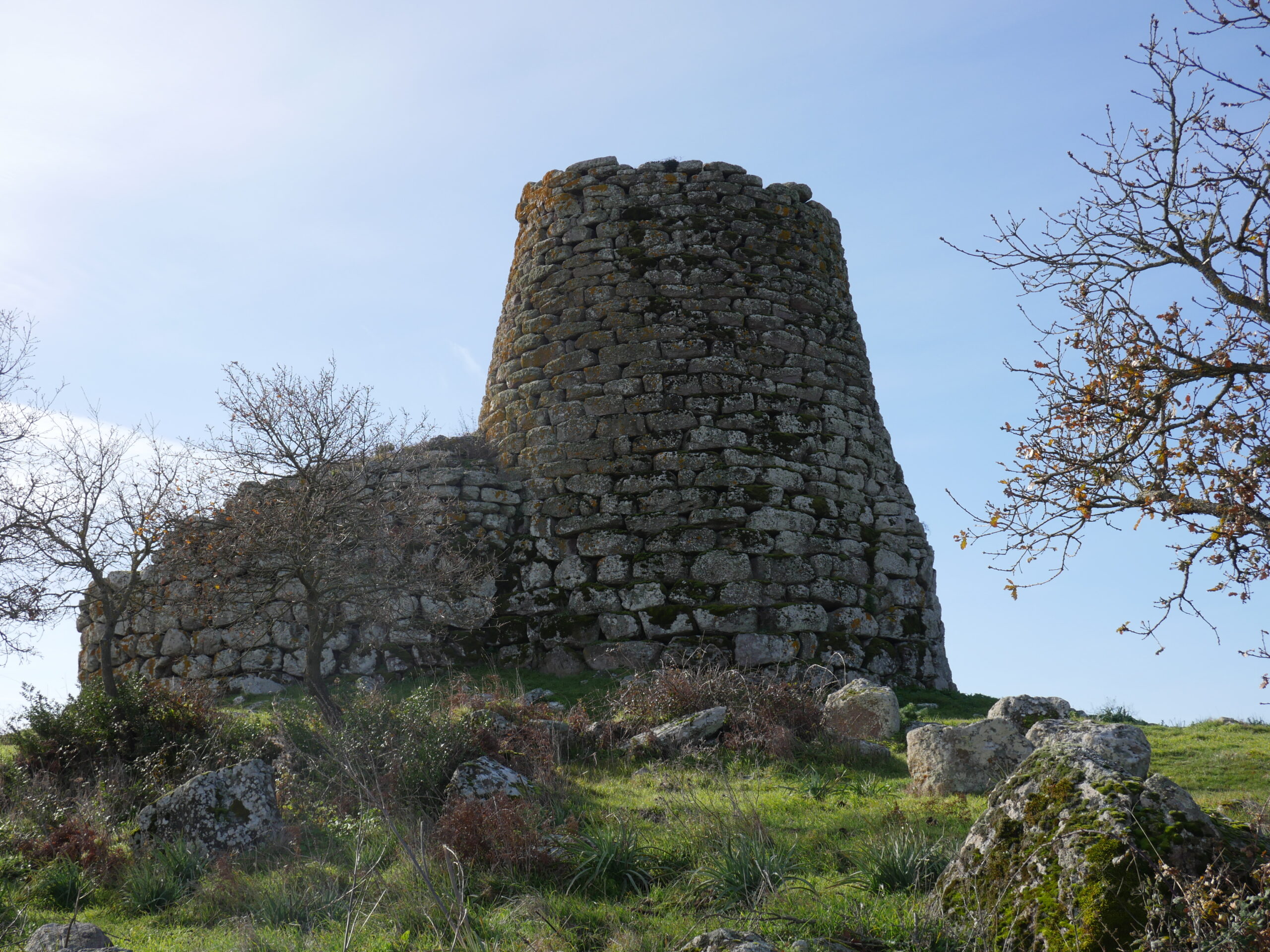
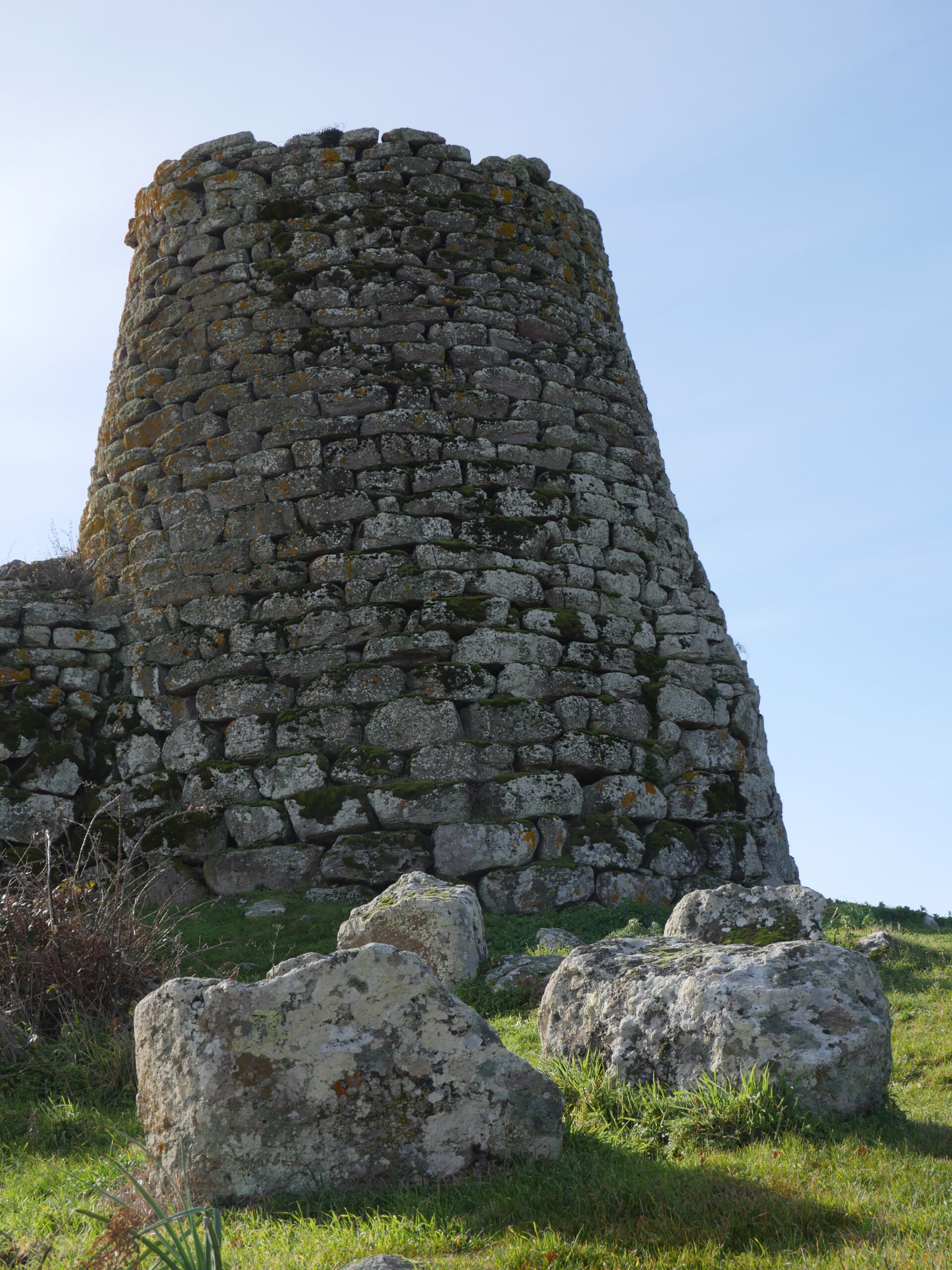
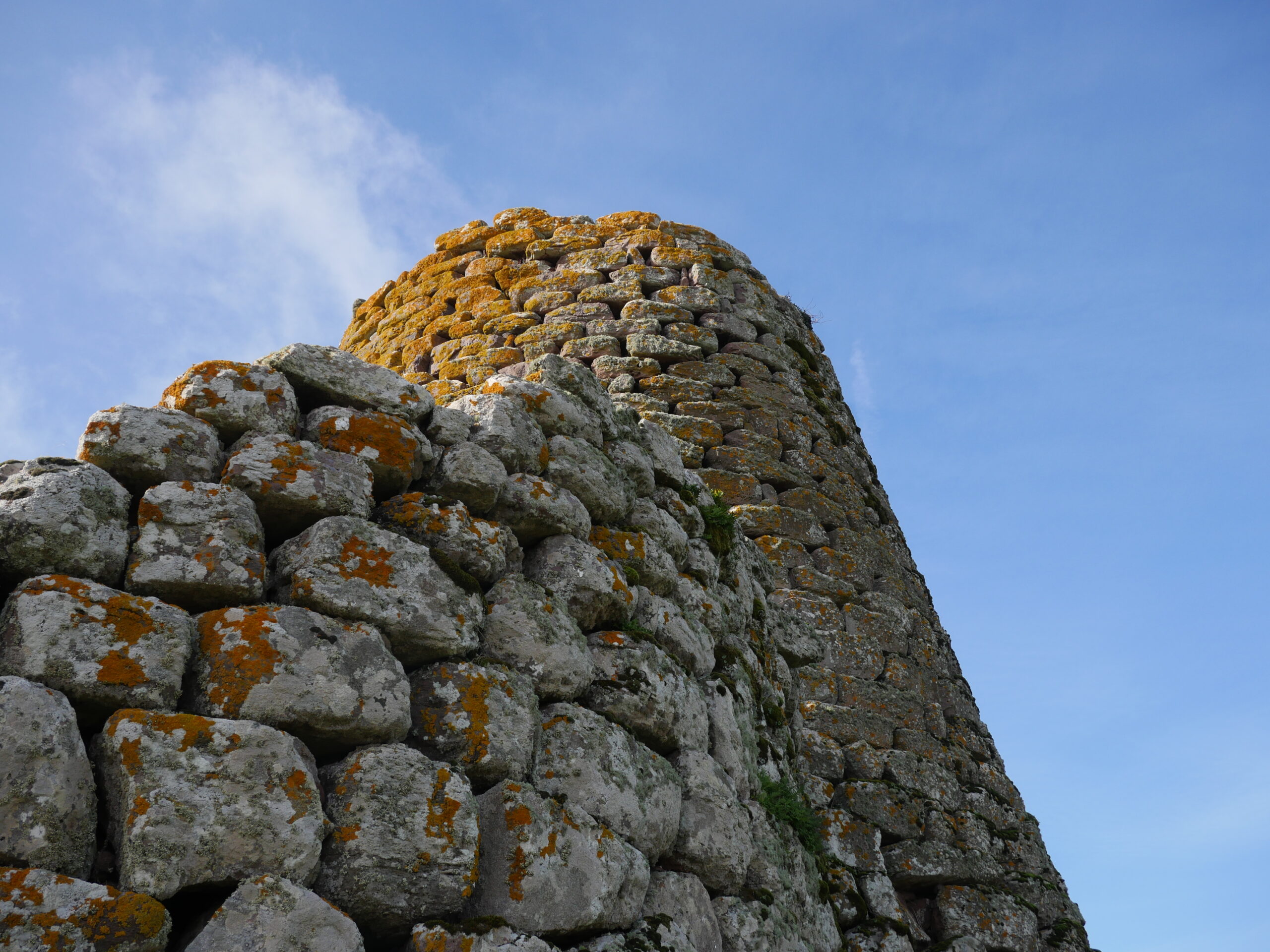
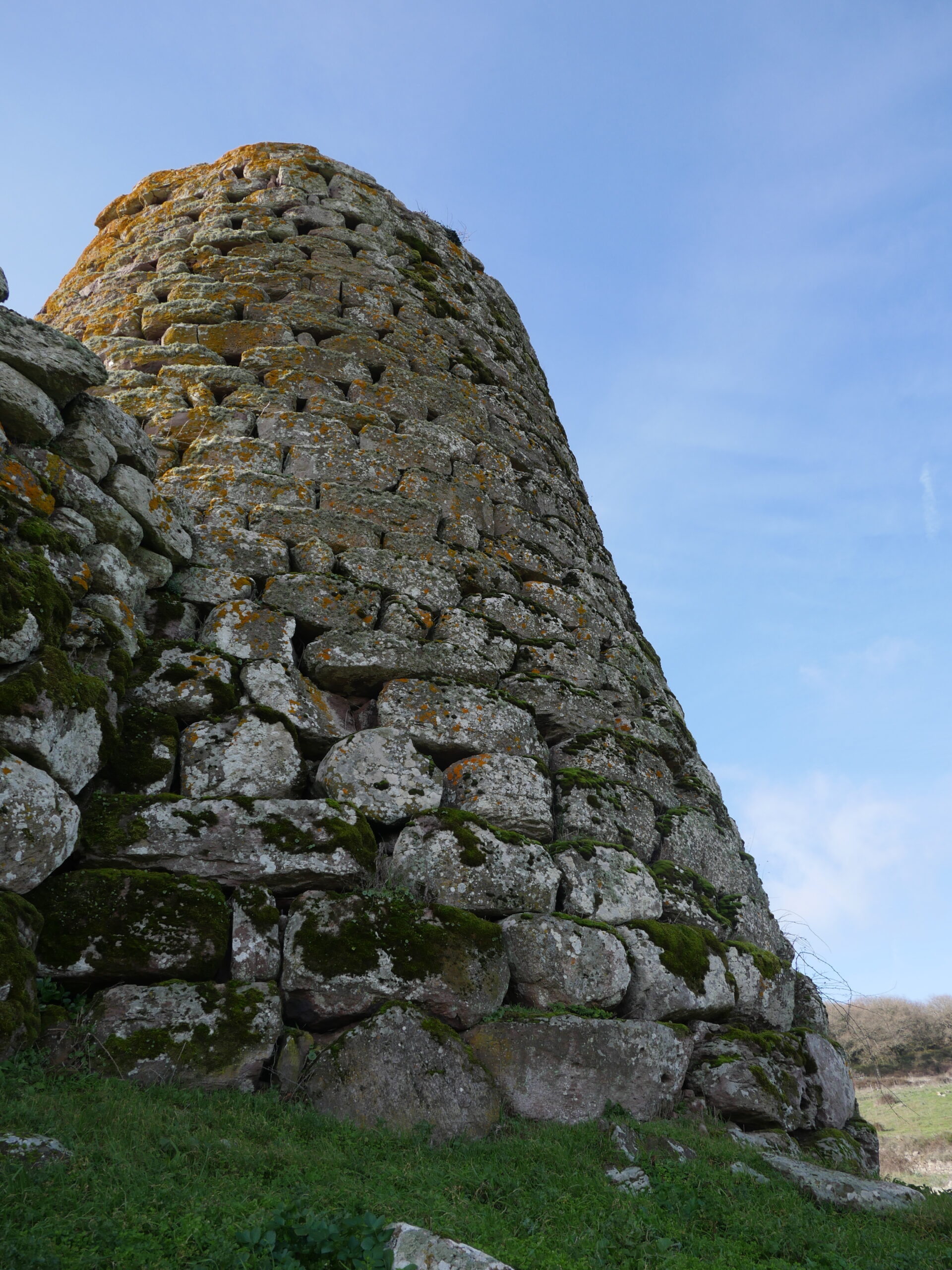
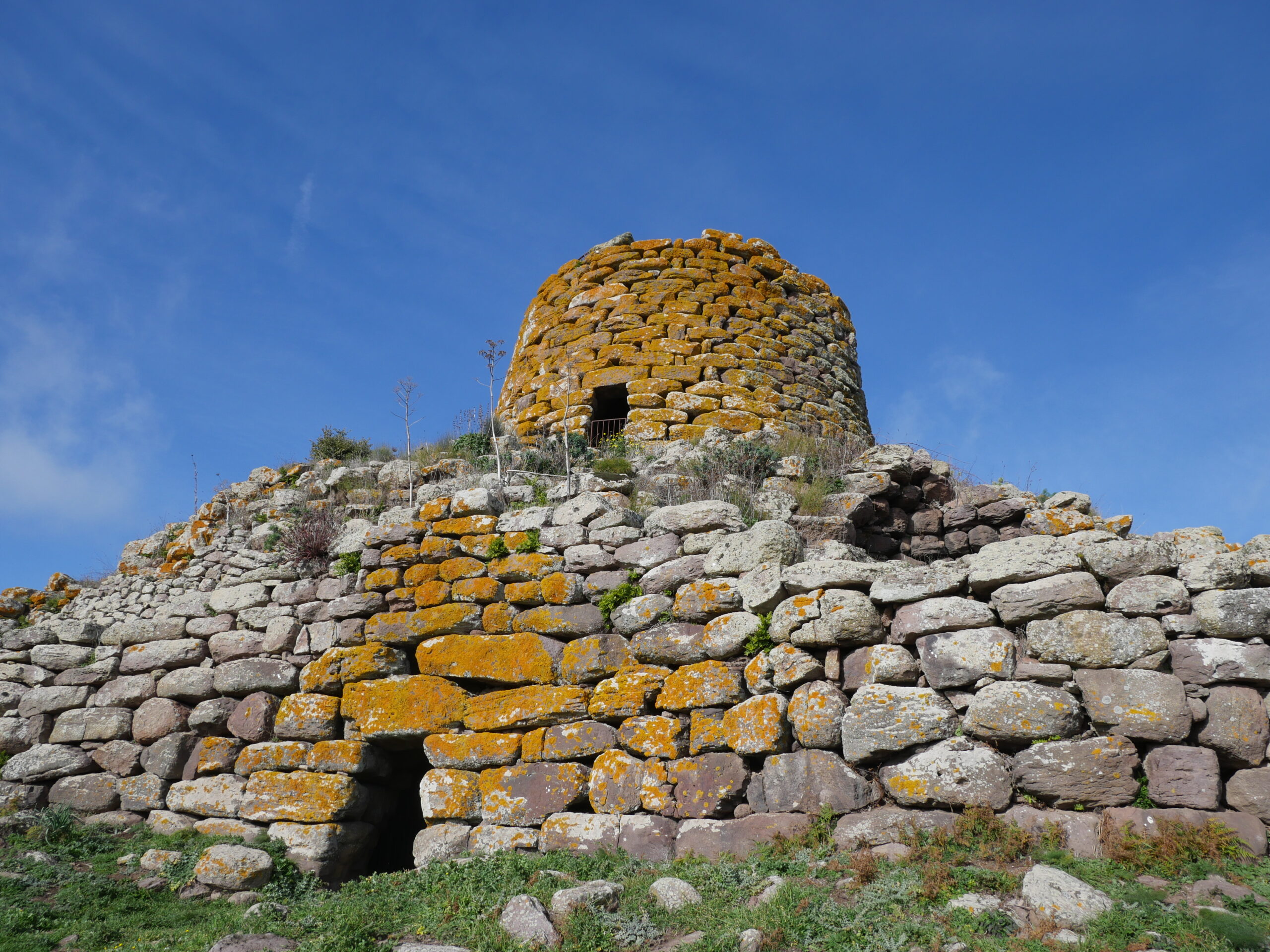
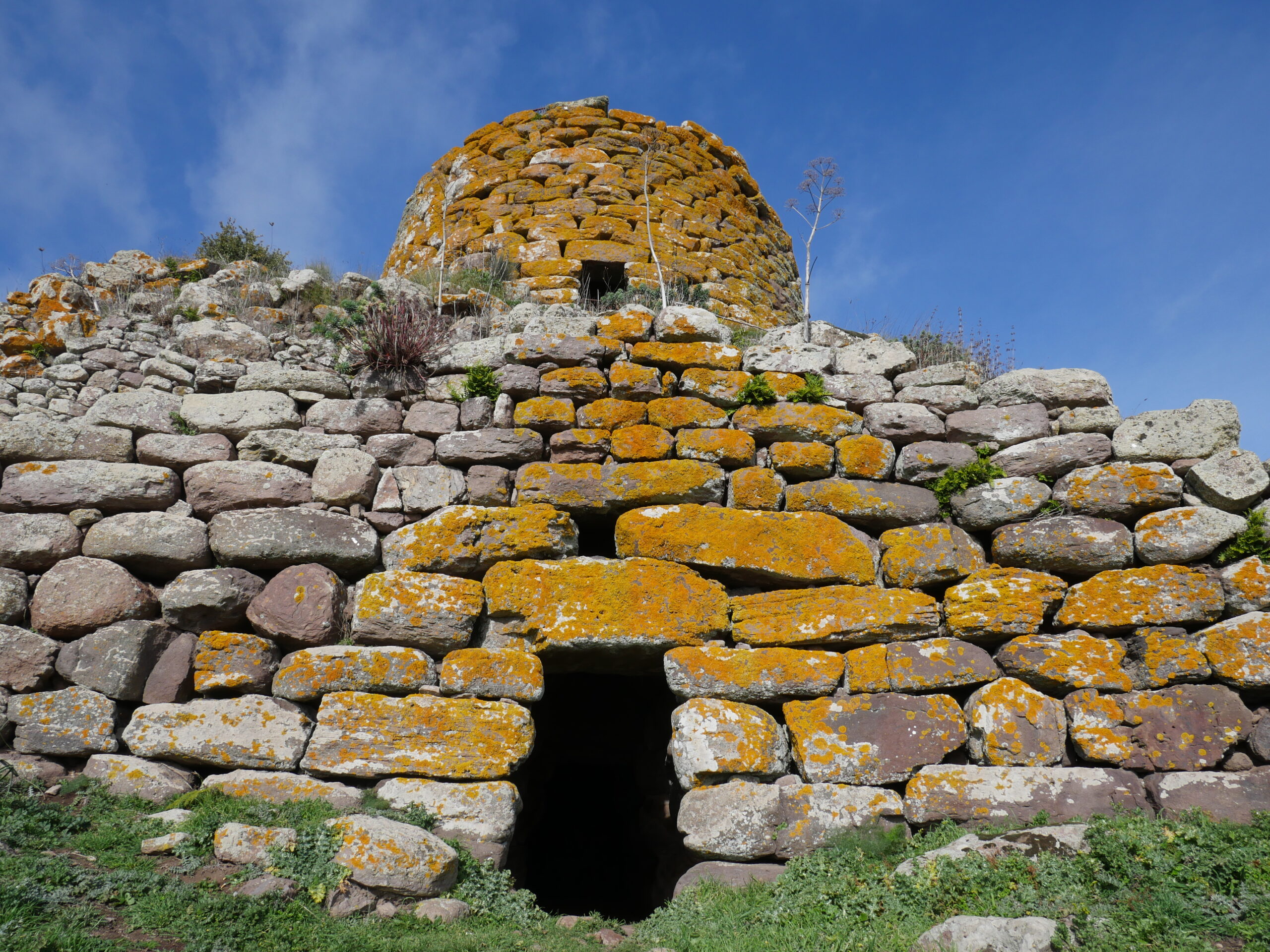
There are also numerous evidences of the Nuragic age in the area. Among these, the most significant is the Òrolo nuraghe, which stands at the foot of Mount Cuguruttu, one of the highest peaks in the Marghine chain. The nuraghe has a central tower (keep) flanked by two towers protecting the open entrance to the south, building what is called the rampart. The structure retains architectural details such as trapezoidal entrances, a helical staircase, and interior chambers lit by slits, with tholos partially intact.
It can be reached by the “Nature Trail” that, starting from the village and passing through the rural hamlet of Mulargia, reaches the summit of Mount Santu Padre, from which a vast panorama can be observed, from the Gennargentu reliefs to those of Sulcis, from the Baronies to Logudoro, and as far as the sea of Bosa.